

 Posted by
 The first question to our mind is, who is a data analyst? What do they do?
Simply put, a data analyst is responsible for collecting, processing, and analyzing data to find sensible insights for decision-making.
In most cases, an analyst will work on the raw data and grind it to produce action-oriented insights. Most analysts won’t work on core machine learning or deep learning models.
A data analyst will use multiple tools to process the data and work with it. Having experience in working with different tools and statistics is vital for them.
We will also discuss each skill and related certifications in the following blocks.
In this article, you’ll find the following sections:
1. Statistics
For every data professional, stats and math are the must-haves. Because without the knowledge of stats and probability, one cannot interpret the data effectively.
Some of the major topics include descriptive and inferential statistics. If you are a beginner, you can spend 2-3 weeks dominating these topics and working on some problems for the hands-on experience. Trust me, the time you put into these is worth a million.
Top Certifications –
- University of Michigan (Coursera) – Statistics with Python . This specialization course will enable you to apply the stats knowledge using python, which is essential.
- Some of top books that you can read are – Practical stats for Data science and Naked Statistics.
2. Excel
Excel is one of the widely used tools for data processing and analysis by data analysts. We may have many other tools to work with data, but Excel has its importance to date.
It provides many functionalities such as charts, analysis, VBA, Macros, Filters, and Formulas. The Pivot table, VLOOKUP, and the new XLOOKUP functions are analysts’ most commonly used functions in excel.
So knowing advanced excel topics will convey a serious message to the employer. Hence, I suggest you pursue some of the best courses and practice as much as possible to master these skills.
Top Certifications –
- 365 Data science – Introduction To excel. This is one of the underrated courses, but it offers more than you need to learn about Excel for data analysis.
- Rice university (Coursera) – Intro To Data Analytics using Excel. This course is a part of the Business stats and analysis specialization and teaches you all about excel from basics to advanced level.
3. SQL
No one other than a working data analyst can tell us more about the importance of using SQL in the analysis. You should also be familiar with databases and their management as an analyst. You have to perform the CRUD operations on the company’s database. For this purpose, no other tool is as flexible and scalable as SQL.
It would be best if you mastered topics such as Joins, Table operations, Unions, group by, order by, and more to perform effective analysis.
Top Certifications –
- Duke university (Coursera) – Excel to MySQL: Analytic Techniques for Business Specialization. . This specialization will help you to learn all the SQL concepts required for data analysis.
- Some of the best books were – Learning SQL (Oreilly) 3rd edition.
- Cathy Tanimura’s book SQL for Data Analysis: Advanced Techniques for Transforming Data into Insights.
- Joe Celko’s book: SQL for Smarties – Advanced SQL Programming
4. Business Intelligence Tools
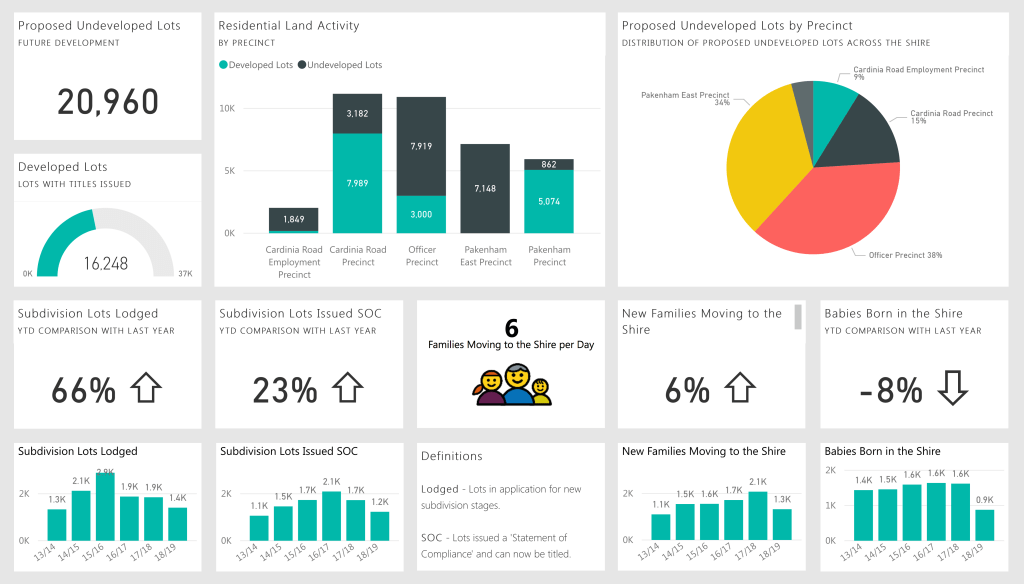
Business intelligence or BI tools are the most used tools for business analysts and data analysts. You can also work on them using Python, R, and SQL.
The BI is mostly used for dashboarding, report-making, and data visualization. Some of the top BI tools for you in 2022 are Tableau, PowerBI, and Looker.
You can follow the official documentation and user tutorials on their respective web pages. But if you want to pursue certification in mastering them, you can follow the courses below.
Top Certifications –
- University of California (Coursera) – Data Visualization with Tableau Specialization. This course is more than enough for your tableau learning journey.
- Udemy – Power BI, the complete introduction. .If you are a beginner, this is the best course which will guide you to master Power BI.
- Cole Nussbaumer Knaflic tells stories with data. I strongly recommend her books:
Storytelling with Data: A Data Visualization Guide for Business Professionals
Storytelling with Data: Let’s Practice! - For looker, you can follow their tutorials on their website which are very organized.
- Guy in a Cube youtube channel.
- How to Power BI youtube channel.
5. Programming Language
Yes, having a good hold on one or more programming languages will be very helpful for you. Though some firms don’t care much about a programming language for analyst roles, having good knowledge of them will be handy.
I strongly recommend learning Python and R for the same. Both languages offer robust libraries such as NumPy, Pandas, and Matplot lib in Python and dplyr, ggplot in R.
Strong knowledge of these libraries can help your analysis be effective and to the point.
Top Certifications –
- IBM Data analytics professional certificate and Google’s data analytics professional certificate can be the best courses to master Python and R for analytics respectively. The former will focus more on python and later focus more on R.
- Free code camp – Data analysis using Python. This course will teach you all the libraries and methods for data analysis using python.
- Intellipaat Youtube Channel, and its Python playlist.
- Top books for Python and R for data analysis are – Python for Data analysis 2nd edition (Oreilly) and Data Analytics with R.
6. Business Acumen
Business acumen plays an essential role in structuring business data analytics. After all, data does not exist in a vacuum, and the context your business provides clarifies and puts your analyses into perspective. In determining the question, you know what is best for your business and will choose which issue you find the most important to resolve.
Business acumen will govern the data process and help you make decisions. It is an underlying theme in each process step, from asking the right question, choosing the correct data, and explaining the analysis to its end consumer.
Good data analysis and business acumen are complements, not substitutes.
Pick up the domain knowledge of the industry you would like to specialize. i.e. Finance, Healthcare, Sports, etc.
7. Portfolio & Resume
The final shot should be on your portfolio and resume upon learning all the skills. One should always work on some real-world projects which require all your acquired skills to play.
Also, you must spend some time on your resume highlighting your skills, projects, and experience. All your handwork can only be presented as a resume and your rich and diverse portfolio.
One last but most important skill is data storytelling. You can be powerful at technical skills and tools, but without a good story, all your analysis will be in vain. So, make sure you convey your findings in a proper manner and medium as well.
For Resume –
- Data camp – Tips to build your resume for data science and analytics.
- Krish Naik – YouTube Channel dedicated for data science. You can find many videos related to resume building and portfolio building in this amazing channel.
All these resources and skills covered in this data analyst roadmap are crucial in building your career in the data domain, particularly analytics.
 BRAIN:Elixir